Globe Valve vs Ball Valve for Control Applications
Globe valves and ball valves are both widely used in industrial process systems, but their performance and typical applications can be quite different.
When selecting a valve for control applications, the decision should not be based only on pipeline size or pressure rating. Flow characteristics, pressure drop, rangeability, shutoff requirements, fluid conditions and actuator configuration should also be considered.
So, what is the difference between a globe valve and a ball valve, and when should each one be considered for process control?
1. Globe Valve for Control Applications
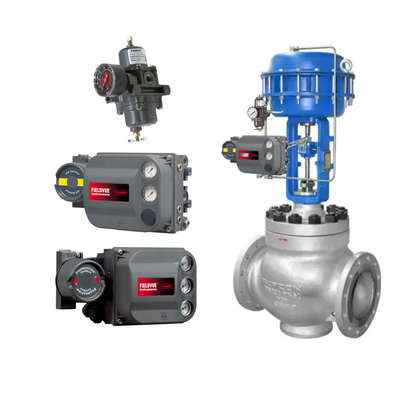
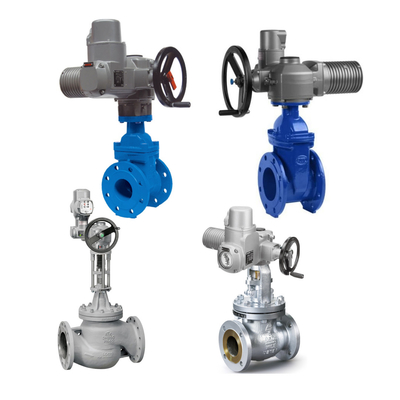
A globe valve uses a movable plug or disc that moves toward or away from a seat to regulate fluid flow.
Because the flow path and trim can be designed specifically for throttling, globe valves have traditionally been widely used as control valves.
Typical advantages include:
- Good throttling performance
- Stable flow control
- Wide range of trim options
- Suitable for many pressure and temperature conditions
- Good control characteristics
- Various flow characteristics available
Globe control valves are commonly used in:
- Chemical processing
- Oil and gas
- Petrochemical plants
- Power generation
- Steam systems
- Process control systems
Products from manufacturers such as Fisher, Samson and Masoneilan are commonly used in industrial control valve applications.
2. Ball Valve for Control Applications
A ball valve uses a rotating ball with a bore through the center. The ball rotates to control the flow path.
Standard ball valves are primarily designed for on/off isolation, but specially designed control ball valves can also be used for modulating applications.
Ball control valves can offer:
- High flow capacity
- Compact construction
- Low pressure loss
- Tight shutoff
- Quarter-turn operation
- Good suitability for certain high-flow applications
Specialized control ball valves are used in applications involving gases, liquids, hydrocarbons and other process fluids.
Manufacturers such as Flowserve, Fisher and Koso offer different types of rotary control valve solutions.
3. Globe Valve vs Ball Valve: Key Differences
| Feature |
Globe Valve |
Ball Valve |
| Valve Movement |
Linear |
Rotary |
| Typical Operation |
Modulating / Throttling |
On-Off or Modulating |
| Flow Capacity |
Moderate |
Generally High |
| Pressure Drop |
Generally Higher |
Generally Lower |
| Shutoff |
Good |
Often Excellent |
| Control Applications |
Widely used |
Application dependent |
| Actuator Type |
Linear |
Quarter-turn |
| Typical Strength |
Precise flow control |
High flow and compact design |
The actual performance depends on the valve design, trim, size and application.
4. Flow Control and Rangeability
For process control, the ability to regulate flow over the required operating range is important.
Globe valves are widely used for applications where stable throttling and predictable flow characteristics are required. Different trim designs can provide characteristics such as:
- Linear
- Equal percentage
- Quick opening
Ball control valves can also provide effective flow control when designed with appropriate control trim.
However, a standard isolation ball valve should not automatically be treated as a control valve. If continuous modulation is required, a purpose-designed control ball valve should be considered.
5. Pressure Drop and Energy Loss
Pressure drop is another important factor.
Globe valves generally have a more restrictive flow path, which can result in higher pressure loss compared with many ball valve designs.
Ball valves typically provide a relatively direct flow path, which can reduce pressure loss when the valve is fully open.
This can be important in applications where:
- Flow capacity is high
- Pumping energy is important
- Pressure loss must be minimized
- Large pipelines are involved
However, lower pressure drop does not automatically mean a ball valve is the right choice for control. The required control performance must also be considered.
6. Shutoff Requirements
If tight shutoff is an important requirement, ball valves may be attractive for certain applications because of their sealing design.
Globe control valves can also provide reliable shutoff when equipped with the appropriate trim and seat configuration.
When evaluating shutoff performance, consider:
- Required leakage class
- Process pressure
- Temperature
- Medium
- Seat material
- Valve design
The required shutoff performance should be specified before selecting the valve.
7. Which Valve Should You Choose?
The choice between a globe valve and a ball valve depends on the application.
Consider a Globe Control Valve When:
- Precise throttling is important
- Stable control is required
- The application requires specific flow characteristics
- Steam or process control is involved
- A wide range of trim options is needed
Consider a Ball Control Valve When:
- High flow capacity is important
- Lower pressure loss is preferred
- Quarter-turn operation is required
- Tight shutoff is important
- The application is suitable for rotary control
These are general guidelines. The actual selection should be based on the process conditions and valve configuration.
8. What Information Is Needed for Valve Selection?
Before requesting a control valve quotation, provide:
✓ Fluid / medium
✓ Minimum, normal and maximum flow
✓ Inlet pressure
✓ Outlet pressure
✓ Operating temperature
✓ Pipe size
✓ Required shutoff performance
✓ Valve material
✓ Actuator type
✓ Fail position
✓ Control signal
For more demanding applications, additional information such as fluid density, viscosity, vapor pressure and noise requirements may also be required.
Globe Valve or Ball Valve for Your Application?
There is no single valve design that is suitable for every control application.
Globe valves are widely used where stable throttling and predictable control characteristics are important, while ball control valves can be suitable for applications requiring high flow capacity, low pressure loss, quarter-turn operation or tight shutoff.
The correct choice should be based on the actual flow, pressure, temperature, medium and control requirements rather than simply selecting the valve with the same size as the pipeline.
We supply industrial control valves from brands including Fisher, Samson, Masoneilan, Flowserve, Koso and other manufacturers.
If you are unsure whether a globe valve or ball valve is suitable for your application, provide the process parameters and valve requirements. Our team can help review the application and recommend a suitable configuration.


 귀하의 메시지는 20-3,000 자 사이 여야합니다!